UC13 - Extended XR museum experience (Athens)
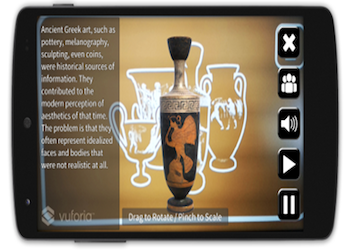
The trial at Technopolis, Athens, engaged 30 participants exploring the Corinth Canal and Parthenon via AR/VR over a commercial 5G network. This trial demonstrated the practical integration of advanced connectivity with educational and cultural applications. While the commercial 5G infrastructure achieved satisfactory results under controlled conditions, limitations emerged for immersive content delivery. The system’s DL Throughput per User proved adequate for lightweight AR/VR content downloading, but application latency posed challenges for deeply immersive experiences, scaling to larger audiences, implementing more complex interactions, and supporting higher-quality assets. This will require improvements in 6G networks to achieve throughput and latency requirements. Field trials received positive feedback across all KVIs, with Cultural Connection achieving the highest score of 4.7/5 and 100% of participants indicating strong resonance with the apps’ ability to foster meaningful cultural engagement. Trust and Acceptability scored 4.6/5, with 97% and 100% positive ratings respectively, reflecting high confidence in the apps’ reliability and welcoming design. User experience and Edutainment each received 4.5/5 ratings highlighting the apps’ intuitive navigation, visual appeal, and engaging educational content. Digital inclusion scored 4.2/5 with all participants rating above 3, indicating the apps successfully accommodate. The evaluation of the use case deployments revealed solid performance for B5G/6G applications, while highlighting challenges related to scalability and latency. UC10 showed sufficient throughput (80 Mbps) and low latency (12.8 ms), supporting real-time streaming but raising concerns for high user densities. UC11 demonstrated reliable uplink (5 Mbps per robot), though latency could impact robot teleoperation in high-stress environments. UC12 met AR throughput requirements but experienced high latency (298 ms), limiting real-time interactions. UC13, deployed in Turin and Athens, operated well under controlled conditions, yet one-way and round-trip latency (149–298 ms) could hinder immersive or large-scale experiences. Overall, the trials showed that while current infrastructure supports engaging applications, future deployments will require lower latency and increased bandwidth to scale effectively. Additional challenges included network dependencies on stable 5G uplinks, the need for edge-cloud hybrid architectures, GDPR and AI Act compliance, and coordination with operational sites such as museums and airports.