UC1 - Smart Crowd Monitoring (Iasi)
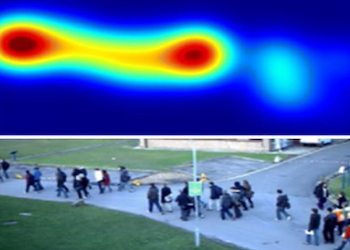
This trial confirmed the benefits of transitioning from 5G NSA to SA architecture with a dedicated URLLC slice. Downlink throughput reached 512 Mbps and uplink 58.6 Mbps, meeting targets, while application-level throughput ranged from 13.6 Mbps for a single camera to 62.7 Mbps for 13 cameras at 2592x1944@25FPS. E2E latency was 10 ms, with round-trip latency including processing between 148–248 ms, supporting near real-time crowd monitoring and AI-based anomaly detection. Trials highlighted that video processing latency depends heavily on server capabilities, indicating the need for distributed edge computing to minimize delays for large-scale deployments.
For 6G, the key requirements include massive uplink capacity (over 10 Gbps per site for 100+ covered cameras), ultra-low latency for instantaneous anomaly detection, and intelligent edge/cloud computing to handle high-resolution video streams. Advanced AI-driven network orchestration and resource management, along with security and privacy-by-design, should ensure scalability, reliability, and public acceptance.