Cities Without Barriers
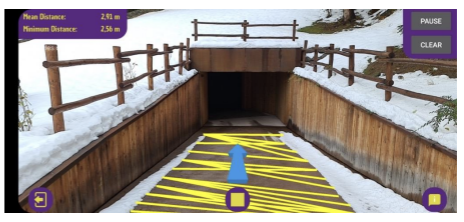
The sub-project’s trial in Turin validated 5G-enabled devices and AI analytics for mapping and navigating urban accessibility barriers. Operators collected data over 500 km of pedestrian routes, generating dynamic accessibility maps for people with mobility challenges. Network KPIs were generally stable, though 5G–4G transitions occasionally affected system stability. The project highlights the need for robust, low-latency, and high-coverage networks to support continuous urban monitoring. For 6G, enhanced coverage, seamless connectivity, and edge-cloud integration will be essential for scalable, inclusive smart city applications.